
For many people experiencing addiction, recovery can mean making a major break from everyday life – leaving home, stepping away from work and family, and entering residential treatment.
And while residential services remain an important part of addiction treatment, for some people, there is another route. It involves entering structured support while continuing to live at home and remain connected to family, friends, work and the community around them.
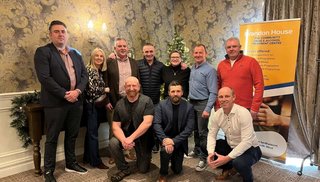
That is the thinking behind the Adult Recovery Group (ARG) at Brandon House Treatment Centre in Tralee, part of HSE South West Addiction Services.
A new evaluation of the programme entitled ‘Recovery without walls’, has provided evidence of what community-based recovery can achieve.
Twelve months after taking part, 79% of participants were abstinent from both alcohol and drugs, while 97% were abstinent from drugs at follow-up. Participants also reported improvements in their mental and physical health, family relationships, work, training and education, social lives and overall wellbeing.
For Barry Corkery, Senior Counsellor with HSE South West Addiction Services, however, the figures only tell part of the story: “The real measure of recovery is what happens in people’s lives beyond simply stopping using alcohol or drugs.”
The idea of “recovery capital” is central to the programme, Barry explains.
“It describes the personal, social and community resources that can help someone maintain their recovery – from supportive relationships and healthier routines, to employment, education and a sense of belonging.”
For participants in the Brandon House programme, that can mean rebuilding trust with family members, reconnecting with children, returning to work or study, developing new friendships and establishing routines that support a healthier life.
It is a very different picture from seeing addiction simply as a problem of substance use.
‘Recovery goes beyond stopping substance use,’ is the message underpinning the evaluation.
For Barry, this is one of the most important aspects of the work.
“People are not being removed from their lives in order to recover from them. Instead, they are supported to make changes while remaining part of the community they will ultimately return to. That can help reduce the stigma surrounding addiction and make recovery feel more achievable and sustainable".
The Adult Recovery Group provides a structured programme, with professional support and opportunities for participants to learn from one another while continuing to live at home.
That combination is important.
Someone attending treatment can still be a parent. They can remain connected to their family and they can continue working or studying where possible. They remain part of their community rather than disappearing from it for a period of time.
And that connection can become part of the recovery itself.
The evaluation found that participants described improvements not only in their substance use but across other areas of their lives, including relationships, health, work and social connections.
For families, the change can be equally significant.
Barry notes how “addiction affects far more than the person using alcohol or drugs. Relationships can become damaged and trust can be lost over time. Recovery can therefore involve rebuilding those relationships and helping families understand what has happened and how they can support each other.”
One of the most powerful moments in the programme comes at the end of the journey, when participants take part in an annual graduation.
“It is an opportunity to recognise what they have achieved and to hear directly from people about their experiences - there can be a great deal of emotion attached to the occasion. For someone who may have spent years feeling defined by their addiction, completing a structured recovery programme and being recognised for that achievement can be hugely important.
“It is also a reminder that recovery is not an abstract concept. It is something that happens in people’s lives. A person who has rebuilt a relationship with their family, returned to work or education, developed new friendships or simply established a stable daily routine is experiencing a very real change.”
Another important element of the approach is what happens after the programme itself comes to an end. Recovery does not operate according to a neat timetable, and completing a course does not mean that a person’s need for support suddenly disappears.
Participants can continue to access support and treatment, with aftercare forming an important part of the longer-term approach.
That continuity matters.
Rather than viewing treatment as something with a fixed beginning and end, the focus is on helping people develop the confidence, relationships and supports they need to maintain their recovery.
The door remains open.
For Barry and his colleagues, the evaluation is important because it illustrates what staff see happening every day: “Individual stories of recovery are powerful, but an evaluation allows those experiences to be examined systematically.
“The findings from Recovery without walls provide evidence that the Adult Recovery Group is an effective community-based pathway, while also identifying areas where the service can continue to develop. The evaluation points to opportunities to improve engagement with younger adults and women and to strengthen follow-up and aftercare.”
Barry has described the approach as community-based, health-led and recovery-oriented – with a focus on outcomes for real people, families and communities. That is perhaps the most significant message from the work.
Recovery is not simply about removing alcohol or drugs from someone’s life. It is about helping people build something in their place.
The benefits can extend well beyond the person attending the programme.
When someone reconnects with their family, returns to work or education, develops healthier relationships and becomes more involved in their community, those changes can have a ripple effect.
Children and families can experience greater stability. Communities can become more connected. And the stigma surrounding addiction can begin to shift as people are seen not simply through the lens of their addiction, but as people capable of recovery and change.
For Barry and the wider team, the work is also a reminder that recovery is not something achieved by one person alone. It is supported by “relationships, professional care, families, communities and the willingness to keep the door open. And sometimes, helping someone recover does not mean taking them away from their life.
“It means helping them find their way back in.”